
|
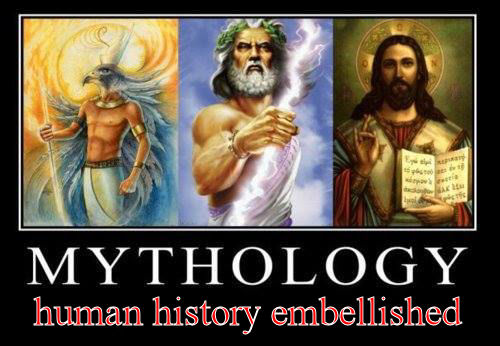

myth : mythology
"Myth renders the
Eternal Soul visible so that it
may be visualized, represented, heard, and made audible."
Jean
Gebser
"Dissident psychiatrist John Weir Perry had a theory.
He believed visionaries,
prophets, and psychotics were
able to descend into the
deepest level of the subconscious and access
new myths to guide societies in
making transitions in times of crisis." - Seth Farber
Myths express
the profound permanent tendencies
in the nature of man.
Myths are designed for
spiritual instruction.
They reveal
guideposts on the journey through life.
Myths, like fables, contain moral visions that
can be understood consciously.
Unlike fables, which are basically
limited to a one event thread, myths include
a narrative of multiple events that build
threads on multiple levels of
understanding, typically both subconsciously and
consciously.
As
a social culture evolves the myths people hold
evolve as well.
The essence of the
timeless mythical narrative is its
evolutive capacity, its
dynamism, its vitality.
Defining myths literally is a huge mistake as
the mythical narrative
elements designed to stimulate the subconscious become misunderstood as
they were not meant to be taken
literally.
Doing so robs the myth of the very thing that makes it a
myth:
the
interpretation of the relation between man and temporal
nature.
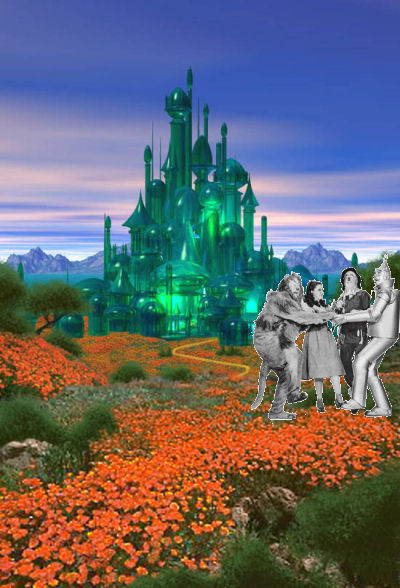
All
civilization is grounded in
myth.
The civilization of the
Middle Ages was grounded
on the myth of the fall, the
redemption on the cross, and
the carrying of the grace of
redemption to man through the sacraments.
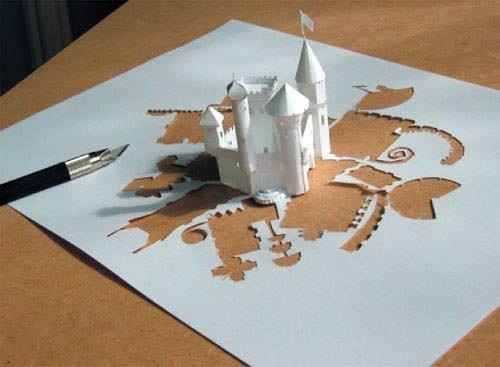
The cathedral,
the center of the
sacrament, is protected by the castle.
There you have the two forms
of government - the government
of the spirit and the
government of the physical life, both in accord with the
One Source.
There were three centers of creativity in the Middle Ages.
There is the village, where the common people dwell in
cottage.
Second is the
Cathedral, associated with
monasteries and
hermitages, places of learning and understanding - now colleges and
universities.
And finally, The Castle,
where the Powerful Father
Protector lives.
In the
center of empire - the
temple, the palace and
the village.
In
Middle Age Europe cathedral,
castle, and
cottage assume these roles.
They are different generating centers of psychic understanding, but in
so far as this is one civilization, they are all operating in the same symbolic
field.
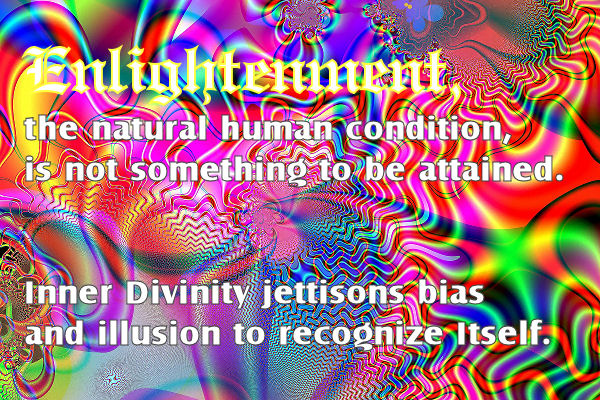
Myth building is social
engineering:
step 1: decide on the
outcome you desire;
step 2:
get all the "facts" lined
up;
step 3: round up people
that agree with you;
step 4: interview them - 1% -
appear to represent the whole
social culture;
step 5:
collect your monetary
reward for myth building!

Delusions of
grandeur of the social engineer

Children are
afraid of the unexplained so many years ago ancestors began telling
mythical narratives to both
entertain and enlighten the
listeners.
As these
mythweavers spun their yarns they attempted to share with the
younger generation all the
knowledge they had accumulated.
This body of knowledge was incorporated
into the myths of the tribe warning of
possible pitfalls and suggesting
fundamental courses of
action.
Myths are clues to the spiritual potentialities of a
fulfilled human life.
When a mythology collides with another
mythology an alchemic reaction
occurs and they amalgamate.
Once they do you get a much more complex
mythology.
Mythology of other cultures
appear fragmented as each culture internalizes so much
cultural tradition it
is subconsciously known and
overlooked when creating and retelling mythical narratives.
The
whole mythologies of all Great
Religions are well wrought poems that point through the
Veil of Cognitive
Blindness to the
Noumenon.
Gnostic
Mystery traditions carry a carefully crafted poetry within which the
Acolyte finds Inspiriting
Visions that bring Reality Alive.
The first function of mythology is
cleansing the Doors of
Perception.
The second function is to
Awaken the Heart.
Using the natural philosophical approach
congruent with a natural
way of thinking in conjunction with an accurate understanding of morality
psychically correct myths may be
wrought.
As MICE culture does
not recognize spirituality as a
valid form of expression we cannot take on
the mask of an active god
as active gods must be
confined.
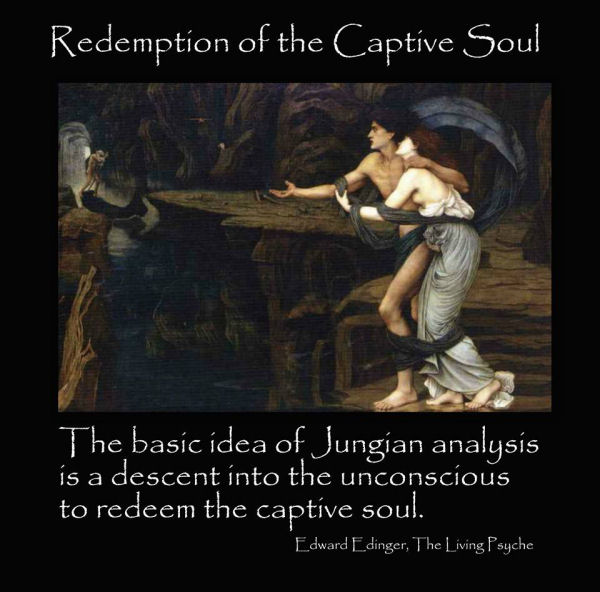
redemption
"Myths are stories
about the wisdom of life.
What we are
taught academically is not the
wisdom of
life.
Although we receive technological information there is
reluctance to admit the life
changing aspects of the technologies we persue.
In science today -
anthropology,
linguistics,
the study of religion, and so
forth - there is a tendency to
specialization.
A specialist has
to know his subject
extensively to be a competent specialist.
This is a tremendous task.
Specialization limits the field of problems the specialist is concerned
with.
The individual who isn't a specialist, but a generalist like
myself, sees something over here that
he has learned from the
specialist, something over there that he has learned from another
specialist - and neither of them has considered the problem of why this occurs
here and also there.
The
generalist gets into a
range of other problems that are more genuinely human than specifically
cultural. " - adapted from Joseph Campbell

"Our brains deal exclusively
with special-case experiences.
Only our minds are able to discover the
generalized principles operating without exception in each and every
special-experience case which if detected and mastered will give knowledgeable
advantage in all instances.
We are in an age that assumes the narrowing
trends of specialization to be logical, natural, and desirable.
When we
expect all earnestly responsible communication to be crisply brief we deprive
of ourselves of comprehensive understanding.
Specialization has bred
feelings of isolation, futility, and
confusion in individuals.
Individuals, therefore, leave responsibility
for thinking and social action to others.
Specialization breeds
biases that ultimately aggregate as
ideological discord." - R.
Buckminster Fuller, Operating Manual for Spaceship
Earth

The
main themes of myths are the same,
and they have always been the
same.
There are historical as well as psychological
aspects of the
similarity of myths.
If you want to find your own mythology,
the
GOLDEN KEY is with what
society do you associate?
Every existent mythology has grown up in
a society in a bounded
field.
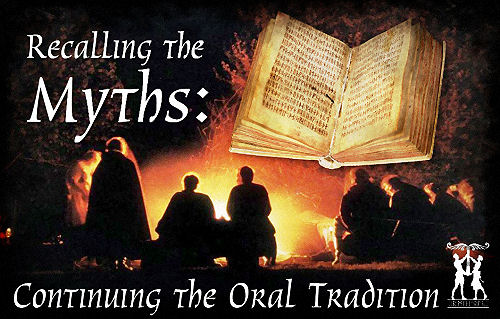
Oral Tradition
The folk tale is designed as
entertainment.
Enlightened ethical storytellers will include instruction and end with a moral
to the folk tale.
The
legend is designed to elicit
social cohesion.
The slayer
of dragons saves the culture from imminent catastrophe.
"There's a
fine saying in India in regard
to these two orders of myths, the
folk idea and the elementary
idea.
The folk aspect is called desi, which means
"provincial," having to do with your
culture.
That is
for young people.
Through desi a young person is brought
into the culture and is taught to go out
and slay monsters.
"Okay, here's
a soldier suit, we've got the job
for you."
But there's also the elementary idea.
The
Sanskrit name for that is
marga, which means 'The
Way.'
The Way is
the trail back to the reality of the
Self or
Eternal
Soul.
The myth comes from the
imagination, and it leads back to
it.
The society teaches you what the myths are, and then it disengages
you so that in your meditations you can
follow 'the Way'." - Joseph
Campbell
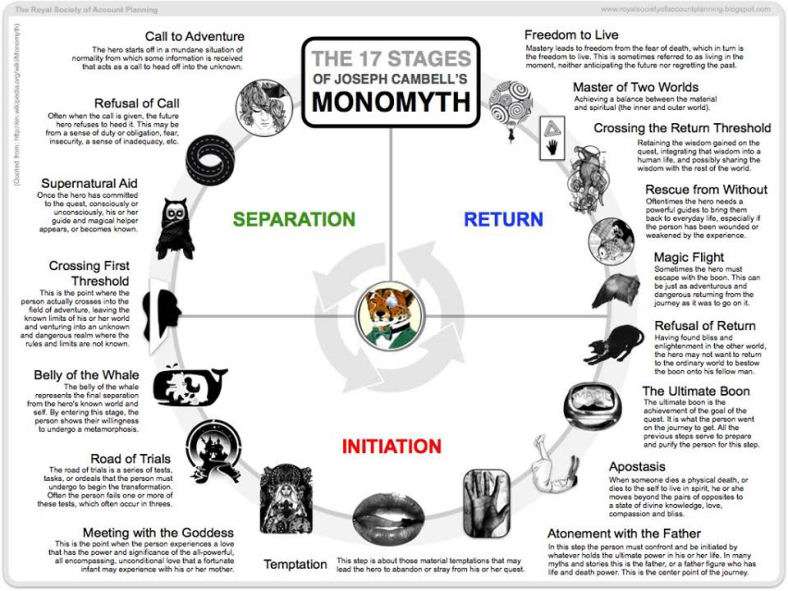 The first is the mystical function which teaches
you awe.
The first is the mystical function which teaches
you awe.
The second has a cosmological dimension, showing you the
shape of the noumenon.
The third function is
the sociological one - supporting and validating a certain social
order.
The final
function is transcend your animalistic material nature.
 |
|
 |
This web site is not a commercial web site and
is presented for educational purposes only.
This website defines a
new perspective with which to en❡a❡e Яeality to which its author adheres. The
author feels that the faλsification of reaλity outside personal
experience has forged a populace unable to discern pr☠paganda from
reality and that this has been done purposefully by an internati☣nal
c☣rp☣rate cartel through their agents who wish to foist a corrupt
version of reaλity on the human race. Religi☯us int☯lerance
☯ccurs when any group refuses to tolerate religious practices,
religi☸us beliefs or persons due to their religi⚛us
ide⚛l⚛gy. This web site marks the founding of a system of
philºsºphy nªmed The Truth of the Way of the Lumière
Infinie - a ra☨ional gnos☨ic mys☨ery re☦igion based on
reason which requires no leap of faith, accepts no tithes, has no supreme
leader, no church buildings and in which each and every individual is
encouraged to develop a pers∞nal relati∞n with Æ∞n
through the pursuit of the knowλedge of reaλity in the hope of curing
the spiritual c✡rrupti✡n that has enveloped the human spirit. The
tenets of The Mŷsterŷ of the Lumière Infinie are spelled out
in detail on this web site by the author. Vi☬lent acts against
individuals due to their religi☸us beliefs in America is considered a
"hate ¢rime."
This web site in no way c☬nd☬nes
vi☬lence. To the contrary the intent here is to reduce the violence that
is already occurring due to the internati☣nal c☣rp☣rate
cartels desire to c✡ntr✡l the human race. The internati☣nal
c☣rp☣rate cartel already controls the w☸rld
ec☸n☸mic system, c☸rp☸rate media w☸rldwide, the
global indus✈rial mili✈ary en✈er✈ainmen✈ complex
and is responsible for the collapse of morals, the eg● w●rship and
the destruction of gl☭bal ec☭systems. Civilization is based on
coöperation. Coöperation with bi☣hazards of a
gun.
American social mores and values have declined precipitously over
the last century as the corrupt international cartel has garnered more and more
power. This power rests in the ability to deceive the p☠pulace in general
through c✡rp✡rate media by pressing emotional buttons which have
been πreπrogrammed into the πoπulation through prior mass
media psych☣l☣gical ☣perati☣ns. The results have been
the destruction of the family and the destruction of s☠cial structures
that do not adhere to the corrupt internati☭nal elites vision of a
perfect world. Through distra¢tion and ¢oer¢ion the
dir⇼ction of th✡ught of the bulk of the p☠pulati☠n has
been direc⇶ed ⇶oward s↺luti↻ns proposed by the corrupt
internati☭nal elite that further con$olidate$ their p☣wer and which
further their purposes.
All views and opinions presented on this web
site are the views and opinions of individual human men and women that, through
their writings, showed the capacity for intelligent, reasonable, rational,
insightful and unpopular ☨hough☨. All factual information presented
on this web site is believed to be true and accurate and is presented as
originally presented in print media which may or may not have originally
presented the facts truthfully. Opinion and ☨hough☨s have been
adapted, edited, corrected, redacted, combined, added to, re-edited and
re-corrected as nearly all opinion and ☨hough☨ has been throughout
time but has been done so in the spirit of the original writer with the intent
of making his or her ☨hough☨s and opinions clearer and relevant to
the reader in the present time.
Fair Use Notice

This site may contain
copyrighted material the use of which has not always been specifically
authorized by the copyright owner. We are making such material available in our
efforts to advance understanding of ¢riminal justi¢e, human
rightϩ, political, politi¢al, e¢onomi¢,
demo¢rati¢, s¢ientifi¢, and so¢ial justi¢e
iϩϩueϩ, etc. We believe this constitutes a 'fair use' of any
such copyrighted material as provided for in section 107 of the US Copyright
Law. In accordance with Title 17 U.S.C. Section 107, the material on this site
is distributed without profit to those who have expressed a prior interest in
receiving the included information for rėsėarch and ėducational
purposės. For more information see:
www.law.cornell.edu/uscode/17/107.shtml. If you wish to use copyrighted
material from this site for purposes of your own that go beyond 'fair use', you
must obtain permission from the copyright owner. |
 Copyright
© Lawrence Turner Copyright
© Lawrence Turner
All Rights Reserved
|