|


Siddhartha
Gautama
gave his dharma to
mankind,
so
humans can
awaken into
enlightenment.
To awaken one must
only pay attention to daily
life,
the middle way. Continually
feeling gratitude and
awe
in one's present existence
brings enlightenment.
Three Marks of
Existence
(three basic truths about the condition of
life)
Anicca (Sanskrit anitya) defined as "impermanence".
Dukkha (Sanskrit duhkha) defined as "suffering".
Anatta (Sanskrit anatman) defined as "egolessness".

"If you suffer, it is
not because things are
impermanent.
It is
because you believe things are permanent.
Remaining aware of
impermanence you become compassionate and wise.
Impermanence is an instrument for
True Liberation.
Enjoy
living, just remain aware of its nature of impermanence.
When you are thirsty, there is nothing wrong in
enjoying a glass of water.
In fact, to truly enjoy it, you have
to dwell in the present moment.
When a flower dies, we don't
cry. We know it is impermanent.
If we practice awareness of
impermanence, we suffer less and enjoy more.
If
we know things are impermanent, we
cherish them in the present
moment.
We know that our
loved ones are of an impermanent nature,
so we do our best to make them
happy now." - Thich Nhat Hanh
The first mark of existence,
impermanence, points to the simple reality that everything - every thought,
emotion, relationship, or situation - everything that has a beginning, also has
an ending.
Nothing with a
beginning is permanent.
In
the search for happiness we pay little attention to impermanence.
Examining motivation we
hold on to what we adore and eject
what we abhor.
Like vs. dislike shifts how brain 'sees'
If our situation is acceptable
we typically feel secure and comfortable.
We feel
betrayed by relations or
with our
understanding of Яeality itself when or if
things change in a manner we didn't want or expect.
We feel situational circumstances
are preventing us from being happy.
Every moment brings
arising thoughts and feelings
and then they fall
away.
The simple truth is
that the only certainty
following gain is eventual loss.
The happiness or joy we expect to
experience in life cannot depend on holding onto material
gain if it is to be a true
sustainable everlasting gain.
True sustainable gain we need to find
within.

Everyday emotional pain,
open heart wounds, is where
compassion is born.
In Sanskrit awakened compassion is
called Boddhicitta or Awakened Heart.
We age, we become sick, we die.
Pain is unavoidable.
When we refuse to embrace emotional
pain, we unwittingly screen
out a large range of emotional experiences that occur in the process of
living.
A person who is truly
alive will feel sorrow
unlike zombies.
This
is so because of the amount of
unnecessary suffering produced by the
imperfection of social
arrangements and because of the
reality of existence.
Sentient
beings are aware of the gap between
aspirations and
actualities.
In this light we understand emotional pain
is inevitable.
We
tend to believe that the opposite of feeling good is not feeling bad.
To keep ourselves from not
feeling bad we condition ourselves to not feel.
All we have to do is allow the
natural empathic response to fill the
horizon.
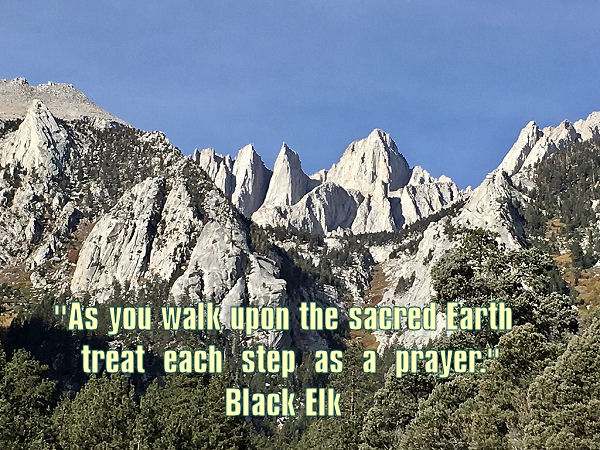
"When we take a step on the green earth,
we
are aware that we are made of air, sunshine,
minerals, and water, that we are
a child of earth and sky,
linked to all other beings." - Thich Nhat Hanh
There is a moment to
moment recognition of egoic needs.
We perpetuate emotional suffering by
thinking we need to be a fixed entity.
Emotional suffering will persist as long as we
avoid at all costs the fear at the heart of it -
we may not be saved or protected and may
suffer emotionally.
Rather than
experiencing fear we attempt to
dismantle fear by con-vincing
ourselves fear is unjustified - we will be
protected and
saved from
suffering.
People are
terrified that they may be unable to
tolerate a reality that they have so very little control over -
the culture,
nature and
the course of
events.
two stages of
egolessness
First stage of egolessness is characterized by recognition
of "the Observer" -
a recognition of emotional detachment
from passing thoughts and feelings.
Second stage of egolessness the
notion of "Observer"
is dropped as there is no longer to detach from
the face of the awesome power of what
is.
We experience life "vividly" by
direct immersion in the process of living.
We cultivate
a practice of living based on direct and
immediate feeling.
We can
tolerate a tremendous range of emotion, and ultimately we must.
This understanding marks the
transition from using spiritual
knowledge as a remedy emotional suffering to develope
the courage to experience life as it
is.

When we imagine
what spiritual awakening must be like we tend to imagine
a dramatically relieving
experience.
More often
what usually occurs is a humbling, a wearing down of the ego.
When
we acknowledge that we are in emotional pain and simultaneously acknowledge
that we are whole, we become
available to others and are able to meet them compassionately.
Great emotional pain creates
great tenderness leaving the ego peeled raw reminding us to let go of a need to
control things which are beyond control.
Great emotional pain is not
punishment for being bad.
This is a potent
opportunity to have hearts open up and
burn with fire.
Finding that
we can tolerate more
emotional pain than we imagined possible
we find a previously unrealized
depth and breadth of being.
1
2
3
4
Correct
understanding: Understanding the Four Noble Truths.
Correct thought:
Resolving to practice Buddhist
philosophy.
Correct speech:
Abstaining from slander,
gossip, and all untrue speech.
Correct conduct:
Adherence to nonviolence (ahimsa).
Correct livelihood: Not engaging
in activity that violates life.
Correct mental attitude:
Bypassing combustible thoughts and
emotions.
Correct mindfulness:
A clear sense of mental state
and bodily health.
Correct concentration:
Meditation to reach
Integral Consciousness. |
|
 |
This web site is not a commercial web site and
is presented for educational purposes only.
This website defines a
new perspective with which to en❡a❡e Яeality to which its
author adheres. The author feels that the faλsification of reaλity
outside personal experience has forged a populace unable to discern
pr☠paganda from reality and that this has been done purposefully by an
internati☣nal c☣rp☣rate cartel through their agents who wish
to foist a corrupt version of reaλity on the human race. Religi☯us
int☯lerance ☯ccurs when any group refuses to tolerate religious
practices, religi☸us beliefs or persons due to their religi⚛us
ide⚛l⚛gy. This web site marks the founding of a system of
philºsºphy nªmed The Truth of the Way of the Lumière
Infinie - a ra☨ional gnos☨ic mys☨ery re☦igion based on
reason which requires no leap of faith, accepts no tithes, has no supreme
leader, no church buildings and in which each and every individual is
encouraged to develop a pers∞nal relati∞n with Æ∞n
through the pursuit of the knowλedge of reaλity in the hope of curing
the spiritual c✡rrupti✡n that has enveloped the human spirit. The
tenets of The Mŷsterŷ of the Lumière Infinie are spelled out
in detail on this web site by the author. Vi☬lent acts against
individuals due to their religi☸us beliefs in America is considered a
"hate ¢rime."
This web site in no way c☬nd☬nes
vi☬lence. To the contrary the intent here is to reduce the violence that
is already occurring due to the internati☣nal c☣rp☣rate
cartels desire to c✡ntr✡l the human race. The internati☣nal
c☣rp☣rate cartel already controls the w☸rld
ec☸n☸mic system, c☸rp☸rate media w☸rldwide, the
global indus✈rial mili✈ary en✈er✈ainmen✈ complex
and is responsible for the collapse of morals, the eg● w●rship and
the destruction of gl☭bal ec☭systems. Civilization is based on
coöperation. Coöperation with bi☣hazards at
the point of a
gun.
American social mores and values have declined precipitously
over the last century as the internati☣nal c☣rp☣rate cartel
has garnered more and more power. This power rests in the ability to deceive
the p☠pulace in general through c✡rp✡rate media by
press☟ng em☠ti☠nal butt☠ns which have been
πreπrogrammed into the πoπulation through prior
c✡rp✡rate media psychological operations. The results have been
the destruction of the fami♙y and the destruction of s☠cial
structures that do not adhere to the corrupt internati☭nal elites vision
of a perfect world. Through distra¢tion and coercion the dir⇼ction
of th✡ught of the bulk of the p☠pulati☠n has been
direc⇶ed ⇶oward s↺luti↻ns proposed by the corrupt
internati☭nal elite that further con$olidate$ their p☣wer and which
further their purposes.
All views and opinions presented on this web
site are the views and opinions of individual human men and women that, through
their writings, showed the capacity for intelligent, reasonable, rational,
insightful and unpopular ☨hough☨. All factual information presented
on this web site is believed to be true and accurate and is presented as
originally presented in print media which may or may not have originally
presented the facts truthfully. Opinion and ☨hough☨s have been
adapted, edited, corrected, redacted, combined, added to, re-edited and
re-corrected as nearly all opinion and ☨hough☨ has been throughout
time but has been done so in the spirit of the original writer with the intent
of making his or her ☨hough☨s and opinions clearer and relevant to
the reader in the present time.
Fair Use Notice

This site may contain
copyCorrected material the use of which has not always been specifically
authorized by the copyCorrect owner. We are making such material available in
our efforts to advance understanding of criminal justice, human Corrects,
political, politi¢al, e¢onomi¢, demo¢rati¢,
s¢ientifi¢, and so¢ial justi¢e iϩϩueϩ,
etc. We believe this constitutes a 'fair use' of any such copyCorrected
material as provided for in section 107 of the US CopyCorrect Law. In
accordance with Title 17 U.S.C. Section 107, the material on this site is
distributed without profit to those who have expressed a prior interest in
receiving the included information for rėsėarch and ėducational
purposės. For more information see:
www.law.cornell.edu/uscode/17/107.shtml. If you wish to use copyCorrected
material from this site for purposes of your own that go beyond 'fair use', you
must obtain permission from the copyCorrect owner. |
 CopyCorrect
© Lawrence Turner CopyCorrect
© Lawrence Turner
All Corrects Reserved
|