|
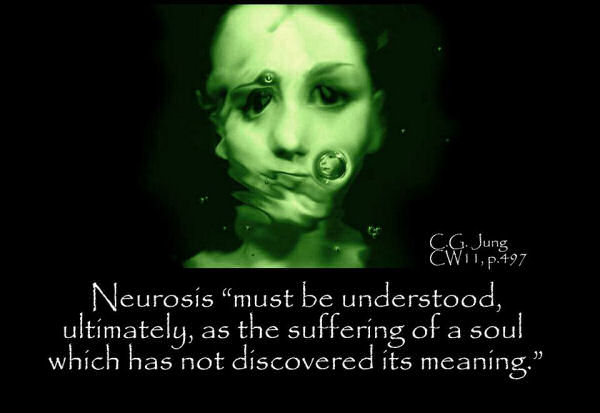
Agoraphobics
are notoriously resistant to
treatment.
Psychologists find them unusually
imaginative,
creative and
intelligent but
extremely uncooperative
when expected to return to the collective.
These highly articulate,
self-imprisoned people
are canaries in the coal mines of
suburbia, casualties in
a toxic cultural environment buried
in Gesellschaft.
Kurt Vonnegut identified it as "a
political disease," afflicting people who lack the
essential emotional "damping
apparatus" that prevents them from "being swamped by the
unbelievability of social culture as it really is."
Lasting relief from agoraphobia did not occur by
changing the perceptions
of suffers but by changing the
pathology "out there in the social group."
Rage and anger become the
foundation of stressed out
individuals suffering from the
pervasive psychological
disorder of a pathological social culture.
Many are
acutely depressed by
the collapse of civility;
unprecedented
homelessness; acceptance of
torture as a method of extracting information;
competition for scarce
resources; preemptive invasions
built on deception; unprecedented incarceration
rates; toxic wastes fouling Earth;
glorification of violence,
murder and
genocide as
solutions to human social
problems.
The political
reality is the paranoia
"is all in our heads."
Modern psychotherapy focuses
almost exclusively on ego,
separating individual
problems from those hidden in the foundation
social culture.
Treatment programs teach disturbed
citizens to cope (not
protest) to adapt (not rebel) to "work the situation" rather than "refuse the unacceptable."
"Therapy, in bed with
governance, creates docile plebes." - James Hillman
Americans,
proudly rooted in a heritage of rugged
individualism, do not generally
think of themselves as
obedient - yet, as Victor Frankl
observed of American
culture, they follow
orders again and again to "be
happy.".
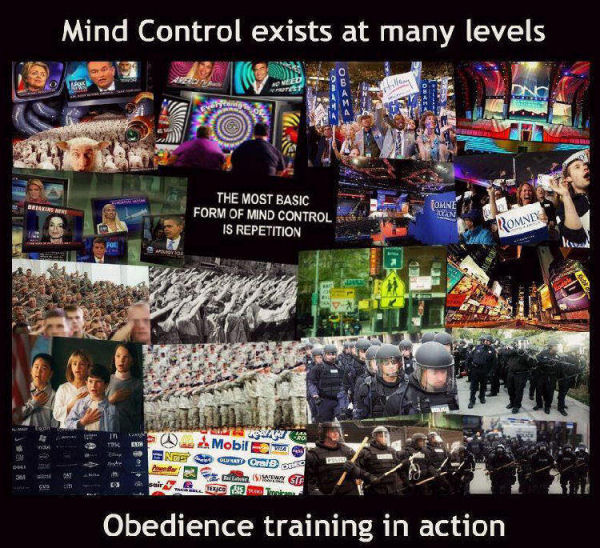
"A life predicated on being obedient is a
very comfortable life indeed.
Living in such a way reduces to
a minimum the need to think." – Adolf Eichmann
Nobel Laureate
Heinrich Boll, after World War
II, said the most dangerous flaw in the
character of the German people could be stated in one word:
Confusion occurs when
imagined abstractions
are mistaken for reality.
The
Cold War seeped into
the American psyche,
killing
community.
The
baby-boom generation
was permanently imprinted subconsciously
with the image of an evil clown
superimposed on the boiling
mushroom cloud.
Secret decisions made
behind closed doors in DC had a
direct impact on my kindergarten days as
air-raid sirens drilled terror into
my head.
Crouched between the wooden runners,
minds squeezed with dread,
hearts pounding we were
hooked on adrenaline out
of the starting gate.
Reaching for the
lower rungs of the
corporate ladder we learned to
hold our liquor while understanding "Whoever dies with the
most toys wins."
Ascendent narcissists
plundered America with
leveraged buyouts.
Market forces
plunder the environment
through deregulation.
Observers
reeling from cultural traumas
question the political
formula of Walter
Lippman and Edward
Bernays to be "purged of
emotion."
Americans,
taught to reformulate reality, allow
unchecked
aggression.

American social culture is
fragmented,
megalomaniacal and
delusional.
200,000 acts of televised violence
an American child sees before turning 18 means one thing to
Arnold Schwarzenegger an
actor with made-up wounds
in fake wars who supports real
military aggression, and another for a
dismembered veteran from a real
war who now leads an unimaginable life.
Cold War secrets
reveal the
the specific details of
environmental
devastation.

If the full details of:
the crazed patient hospitalized in Oak Ridge, Tennessee disappearance;
Karen Silkwood death in a car accident,
and the briefcase of missing papers;
Iran-Contra
documents are under legal blockades at the National Archives;
lifting of gag orders in the
settlement of critical medical suits;
if buried research explaining
immune system
dysfunctions is released;
we will not be surprised by
the compromising secrets they contain.
Before any
radioactive or
toxic wastes can be dumped in the
deserts or the
oceans, they must first
pass through dozens of minds.
Secret plans are
discussed, secret orders
are issued, secret memos typed for
secret cargo to be
transported to secret destinations
have to be reached.
Homeless are not dropped on the streets by a
deus ex machina.
They arrive through
human actions and social choices.
Nonsense urban-renewal
redevelopment projects using eminent domian.
Elimination of unskilled jobs that pay
enough to support an individual.
Reinstitutionalization of the mentally
ill in private
prisons.
From
mental health
experts to taxpayers
nearly all are guilty of
indifference.
Breaking the habits of
denial is no small chore.
Purged of feeling
individuals are trapped
behind veil of cognitive
blindness.
Political systems
that force individuals to
conform to industrial roles and
dehumanizing lifestyles
create individual suffering
on a massive scale.
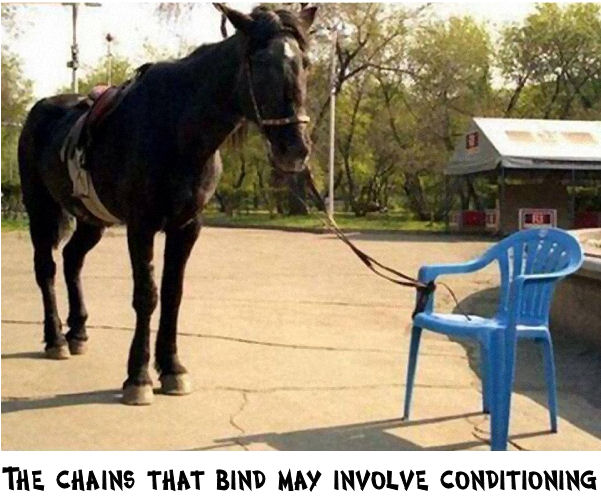
"True ignorance is not the
absence of knowledge,
but the refusal to acquire it." - Karl
Popper
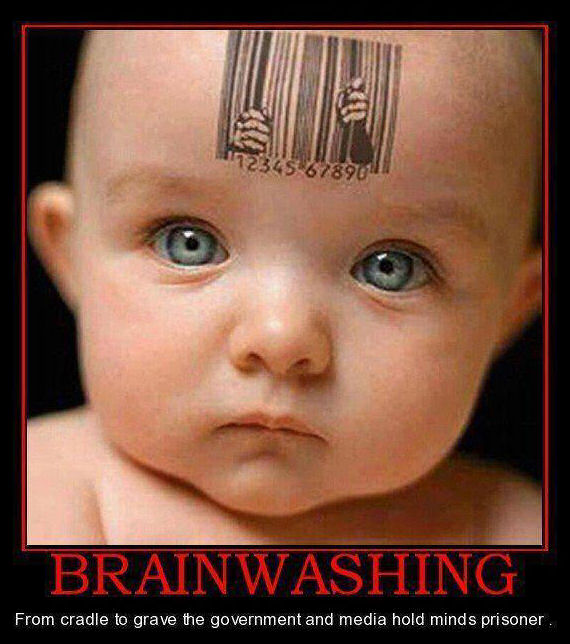
A
predictable living is preferable to living on
the thin edge of
not-life.
Individuals face confronted
situations primarily through pattern
matching.
Although individuals
claim to reason to come to
a conclusion their actual decision is
based more upon a
"feeling" than on a rational decision.
Assume a consumer
purchases a product. The
product works as advertised.
This consumer emotionally
registers satisfaction with the product.
That
emotional satisfaction
subconsciously brands the individual.
Subconscious emotional
branding creates the
"correct" emotional response.
We have the "right feeling" and that
right feeling induces
product loyalty.
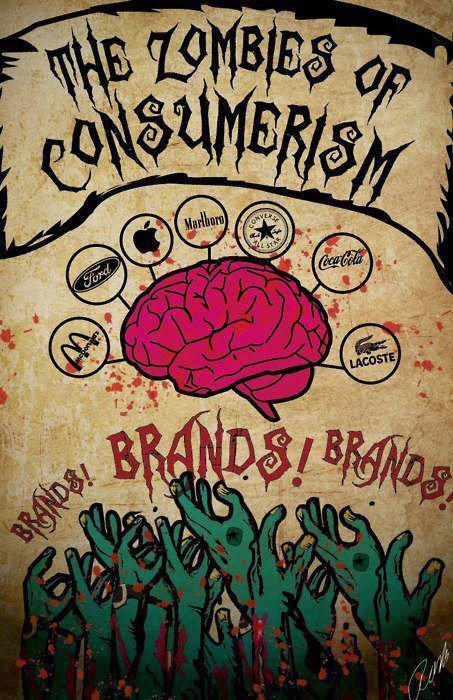
To find profit marketers must brand the product on
the buyer mind.
Such efforts put the average American adult in the
cross hairs of ~ 3,000 advertising messages a day, five times more than two
decades ago.
Children are exposed to ~ 40,000 advertisements every
year.
By the age of 18 months,
they can recognize
logos.
By 10, they have memorized 300 to 400 brand logos.
The average adult can recognize
thousands of brand
logos.
Many seemingly rational
decisions are reflexive snap
judgements.
These
orchestras of cells are
surprisingly malleable, readily responding to the influence of
experience.
The inescapable influence of
marketing brands minds.
Brand marketing physically alters the brain
structure.
Just as practicing the piano or
learning to read can
physically alter areas of the cerebral cortex, the
intense, repetitive stimulation of marketing shapes susceptible brain circuits
involved in the decision making process.
While
monitoring brain activity
directly observers make inquiries
into consumer choice by harnessing
techniques pioneered for
medical diagnosis:
positron emission tomography measures
brain chemical activity;
magnetic
resonance imagery measures the magnetic fields of the brain;
functional magnetic resonance measures
blood flow around
neurons.
"Prying open the jar and seeing
what is inside." - psychologist Jonathan Cohen, Princeton, Center for the Study of Brain,
Mind, & Behavior
In the
mind' eye,
celebrity faces trigger
many of the same circuits as images of shoes, cars, chairs, wristwatches,
sunglasses, handbags
and water bottles.
Objects and
celebrity faces are
reduced to a common denominator as
a spasm of synapses in a
part of the cortex called Brodmann's area 10, a brain region associated with a
sense of identity and
social image.
None of these neural
responses come consciously to mind browsing brands.
Most of what is considered
the product of deliberation
is actually driven by automatic emotional response
processes evolved to manage conflicts between
sex,
hunger,
thirst and the other
elemental appetites of
survival.
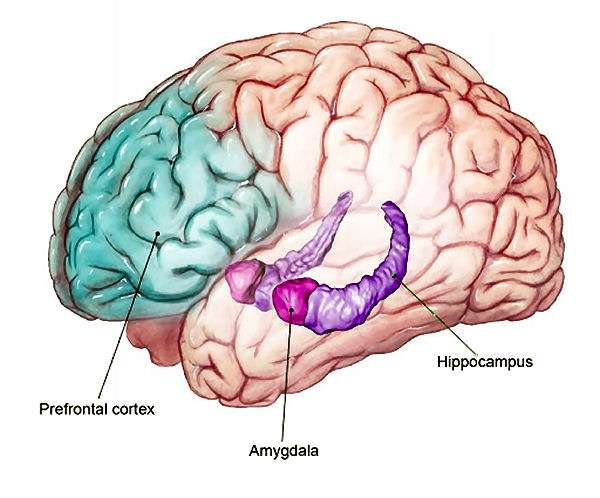
In recent years,
observers have discovered that
regions such as the
amygdala, the hippocampus and the hypothalamus work as
dynamic switchboards
that blend memory,
emotions and
biochemical triggers.
These
interconnected regions of
neurons shape the
way fear,
panic,
exhilaration and
social pressure influence the
way choices are made.
Political beliefs
trigger the same malleable circuits of
reward, identity,
anticipation,
expectation,
desire and
threat that
product branding does.
Lattices of neurons are linked, then continually
revised, by experience.
So intimate is this feedback that there is
no way to separate the brain's
neural structure from the influence of
the world that surrounds it.
Once
observers learned to map
the anatomy of behavior
they realized that the brain, shaped by the
interplay of genes
and environment, is
malleable.
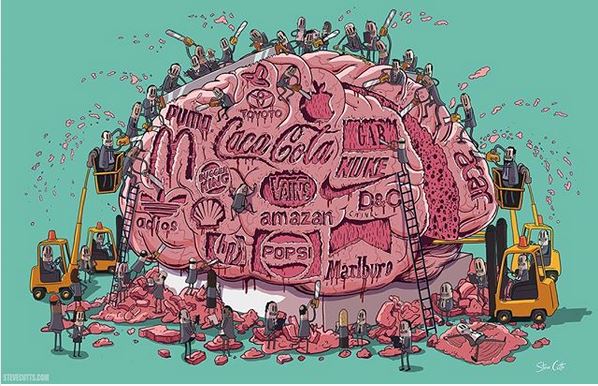
Advertising is predicated on
marketing but it' no trick to sell people what they want;
the trick is to make people want
to buy what you have to sell.
Consumers think
purchasing decisions are
within rational control.
Knowing they are being manipulated
into making a purchase, they
recoil.
Knowing ads are designed
to "sell" they still think
themselves immune.
People want
to be entertained but refuse to see entertainment
is, in fact, merely a vehicle for inducing
them to purchase an advertised products.
They want the
boundaries between
entertainment and advertising pitches to be clearly delineated.
That delineation is the last thing
business wants.
Consumers of
entertainment need to understand how they
are manipulated.
When consumers found the remote, the videotape and
TiVo they zapped commercials. Advertisers returned the volley with product
placement.
In feature films deals between producers and advertisers
have flourished.
Studios are paid large fees for conspicuously placing
products in a scene or making brand name products part of the storyline, except
as McGuffin.
The following is an actual proposal for product
placement:
Dear Mr. Smith,
We are about to go into production
with the motion picture, "Run, Sheep, Run", a suspense thriller, set in
the city of Los Angeles, California.
If there is any interest from your
company, and I'm sure there must be, the film is better than any commercial run
on television or any magazine
The audience will be totally unaware of
the sponsor involvement.
I would like delivery of brands and cartons of
cigarettes to be used.
We would enter a contract, that upon
distribution, your company, Reynolds Tobacco, would pay to our
production company, the sum of $500,000.00.
If for any reason the film
is not distributed, then your company is out only the time in
answering my letter, and a few
packages of cigarettes.
I think this protects both of us. I expect to
hear from you very shortly.
Robert P. Richards
08/25/72
 |
|
 |
This web site is not a commercial web site and
is presented for educational purposes only.

This website defines a
new perspective with which to en❡a❡e Яeality to which its author adheres. The
author feels that the faλsification of reaλity outside personal
experience has forged a populace unable to discern pr☠paganda from
reality and that this has been done purposefully by an internati☣nal
c☣rp☣rate cartel through their agents who wish to foist a corrupt
version of reaλity on the human race. Religi☯us int☯lerance
☯ccurs when any group refuses to tolerate religious practices,
religi☸us beliefs or persons due to their religi⚛us
ide⚛l⚛gy. This web site marks the founding of a system of
philºsºphy nªmed The Truth of the Way of the Lumière
Infinie - a rational gnostic mystery
re☦igion based on reaso🐍 which requires no leap of faith,
accepts no tithes, has no supreme leader, no church buildings and in which each
and every individual is encouraged to develop a pers∞nal relati∞n
with Æ∞n and Sustainer through the pursuit of the knowλedge of
reaλity in the hope of curing the spiritual c✡rrupti✡n that
has enveloped the human spirit. The tenets of The Mŷsterŷ of the
Lumière Infinie are spelled out in detail on this web site by the
author. Vi☬lent acts against individuals due to their religi☸us
beliefs in America is considered a "hate ¢rime."
This web site in
no way c☬nd☬nes vi☬lence. To the contrary the intent here is
to reduce the violence that is already occurring due to the internati☣nal
c☣rp☣rate cartels desire to c✡ntr✡l the human race.
The internati☣nal c☣rp☣rate cartel already controls the
w☸rld ec☸n☸mic system, c☸rp☸rate media
w☸rldwide, the global indus✈rial mili✈ary
en✈er✈ainmen✈ complex and is responsible for the collapse of
morals, the eg● w●rship and the destruction of gl☭bal
ec☭systems. Civilization is based on coöperation. Coöperation
with bi☣hazards of a gun.
American social mores and values have
declined precipitously over the last century as the corrupt international
cartel has garnered more and more power. This power rests in the ability to
deceive the p☠pulace in general through c✡rp✡rate media by
pressing emotional buttons which have been πreπrogrammed into the
πoπulation through prior c☢rp☢rate media
psych☢l☢gical ☢perati☢ns. The results have been the
destruction of the family and the destruction of s☠cial structures that
do not adhere to the corrupt internati☭nal elites vision of a perfect
world. Through distra¢tion and ¢oer¢ion the direction of
th✡ught of the bulk of the p☠pulati☠n has been directed
toward solutions proposed by the corrupt internati☭nal elite that further
con$olidate$ their p☣wer and which further their purposes.
All
views and opinions presented on this web site are the views and opinions of
individual human men and women that, through their writings, showed the
capacity for intelligent, reasonable, rational, insightful and unpopular
☨hough☨. All factual information presented on this web site is
believed to be true and accurate and is presented as originally presented in
print media which may or may not have originally presented the facts
truthfully. Øpinion
and ☨hough☨s have been adapted, edited, corrected, redacted,
combined, added to, re-edited and re-corrected as nearly all opinion and
☨hough☨ has been throughout time but has been done so in the spirit
of the original writer with the intent of making his or her
☨hough☨s and opinions clearer and relevant to the reader in the
present time.
Fair Use Notice
This site may contain
copyrighted material the use of which has not always been specifically
authorized by the copyright owner. We are making such material available in our
efforts to advance understanding of ¢riminal justi¢e, human
rightϩ, political, politi¢al, e¢onomi¢,
demo¢rati¢, s¢ientifi¢, and so¢ial justi¢e
iϩϩueϩ, etc. We believe this constitutes a 'fair use' of any
such copyrighted material as provided for in section 107 of the US Copyright
Law. In accordance with Title 17 U.S.C. Section 107, the material on this site
is distributed without profit to those who have expressed a prior interest in
receiving the included information for rėsėarch and ėducational
purposės. For more information see:
www.law.cornell.edu/uscode/17/107.shtml. If you wish to use copyrighted
material from this site for purposes of your own that go beyond 'fair use', you
must obtain permission from the copyright owner. |
 Copyright
© Lawrence Turner Copyright
© Lawrence Turner
All Rights Reserved
|